
Case Studies: Teaching that Leads to Transformation
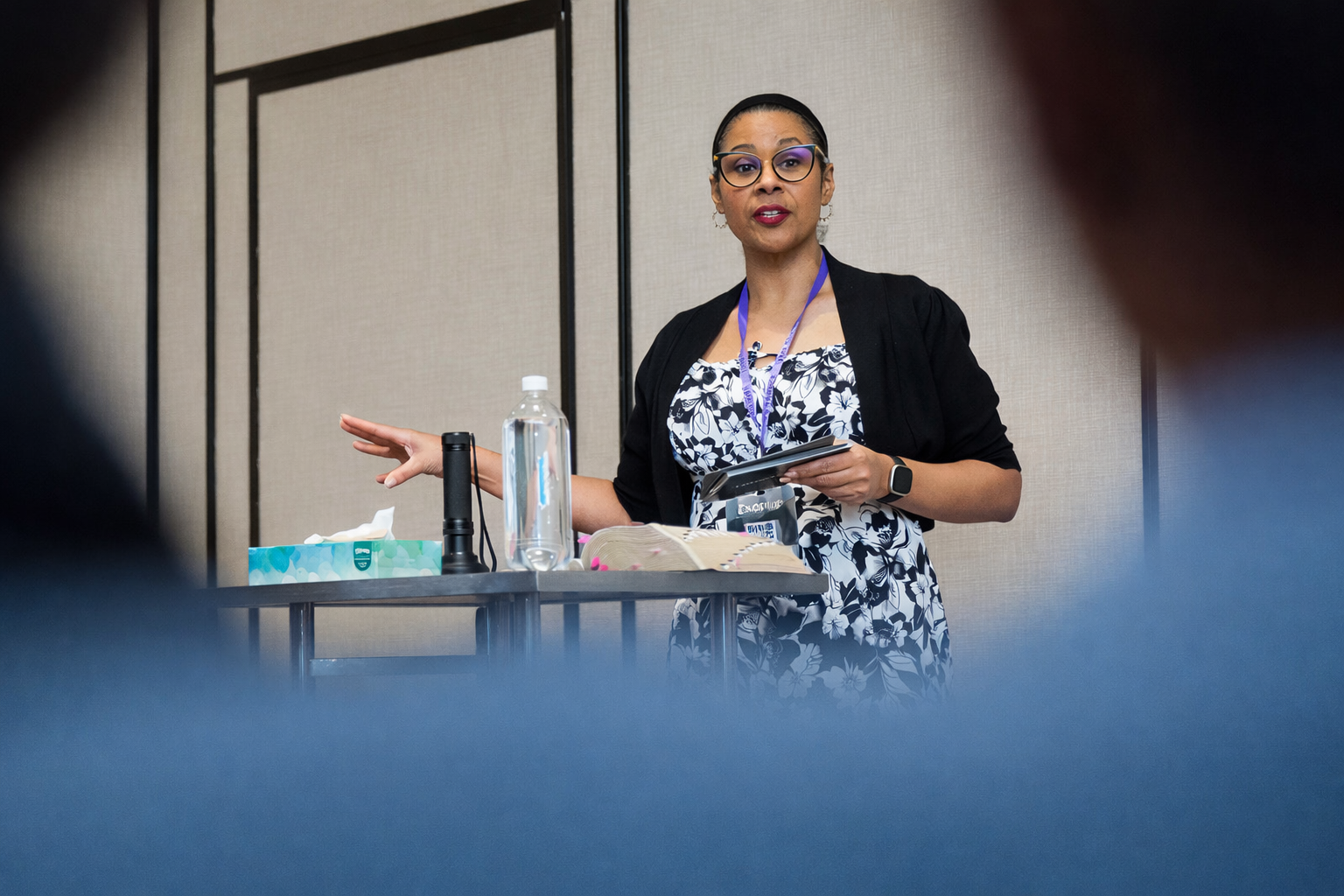
Building Environments Where Disciples Actually Grow
Industry: Faith-Based Ministry / Discipleship Formation
Engagement: 6-Month Discipleship Cohort Facilitation
The Situation
During a virtual training program at Ignite. Sparked by God Church, a clear divide began to emerge among participants.
Some students were ready to advance, and others were still wrestling with foundational spiritual barriers — including pride, anger, fear, control, and rejection — that were preventing meaningful progress in their spiritual development.
Rather than forcing every participant through the same curriculum, Apostle Kendra Y. Hill created two separate training tracks.
Students who were ready to advance in the curriculum stayed on their track, while a second cohort entered a discipleship process designed to address deeper spiritual formation.
That discipleship track was co-facilitated by Rev. Kimberly Braxton.
The objective was to create a structured environment where participants could confront internal barriers and develop the habits necessary for long-term spiritual maturity.
The Challenge
Discipleship challenges are rarely information problems.
They are formation problems.
Participants entered the cohort with varying levels of spiritual maturity and emotional readiness. Many were navigating unresolved personal struggles that made vulnerability and accountability difficult.
Without intentional facilitation, group environments like this often remain surface-level or become dominated by a small number of voices.
Co-leading the cohort required creating an atmosphere in which participants could be honest about their struggles while remaining accountable for their growth.
The Approach
Rev. Kimberly Braxton co-facilitated the cohort through a six-month structured discipleship process that integrated biblical teaching with reflection, accountability, and community support.
Each weekly session incorporated multiple elements designed to reinforce growth:
Scripture-based teaching presentations
Guided self-examination and reflection exercises
Weekly assignments encouraging practical spiritual disciplines
Open discussion of personal challenges
Instructor-led and peer prayer during sessions
Ongoing encouragement through a cohort Telegram group
Occasional one-on-one conversations to address deeper struggles
Sessions typically opened with prayer and participant updates, allowing individuals to reflect on their progress and receive feedback.
Rev. Braxton’s facilitation style blended warmth, transparency, and direct guidance, helping participants feel safe enough to be honest while still challenging them to confront areas of resistance.
The Outcome
Five students completed the six-month discipleship cohort and demonstrated noticeable personal and spiritual growth.
Examples of transformation included:
A participant who initially avoided active participation gradually began contributing to discussions, praying publicly, and sharing Scripture-based insights.
One individual who struggled with anger and resentment began practicing consistent prayer and fasting and reported experiencing a significant release of emotional burden.
A participant who had previously focused primarily on personal struggles began to encourage and pray for other members of the cohort.
Another student who had been hesitant to share personal challenges began speaking openly and receiving support from peers.
Over time, the group culture shifted significantly.
What began as a cautious and guarded environment gradually became a space marked by honesty, humility, and mutual encouragement.
Even where certain struggles remained ongoing, participants demonstrated meaningful growth by choosing transparency over avoidance.
Key Insight
This cohort reinforced a central principle of discipleship leadership:
Lasting transformation rarely happens instantly.
Meaningful change develops through consistent participation in an environment that combines:
Biblical teaching
Prayer
Accountability
Honest conversation
Supportive community
When individuals remain committed to this process, gradual and sustainable transformation becomes possible and sustainable.
Strategic Application
Many churches and ministry organizations recognize the need for discipleship but struggle to move participants beyond information-based learning into environments that produce measurable spiritual formation.
This case study demonstrates how structured facilitation, guided reflection, and consistent accountability can transform small group environments into communities where genuine discipleship occurs.
Church leaders and faith communities seeking to strengthen spiritual formation, discipleship, and cultivate greater spiritual accountability within their communities may benefit from implementing cohort-based discipleship models.
To explore facilitation or leadership support for discipleship cohorts within your ministry context, contact Rev. Kimberly Braxton to begin the conversation.
Confronting the Jezebel Spirit in a Virtual Space
Industry: Faith-Based Ministry / Discipleship Formation
Engagement: A One-Night Interactive Virtual Bible Teaching
The Situation
Within the church community, recurring behavioral patterns had become increasingly difficult to ignore.
While there had been previous conversations around the Jezebel spirit and its manifestations, some individuals repeatedly fell into patterns of control, manipulation, intimidation, dishonesty, resentment, pride, and anger. Although moments of progress would occur, some individuals would eventually regress into old, familiar patterns of behavior and relational dysfunction.
The challenge was not simply identifying the issue.
The challenge was helping people confront it honestly without becoming defensive, shutting down emotionally, or redirecting attention toward other people.
Rev. Kimberly Braxton was asked to facilitate a teaching session that would address the issue directly while still creating an environment in which participants could remain open, reflective, and engaged.
The Challenge
Teachings surrounding the Jezebel spirit often create one of two unhealthy outcomes:
people become fearful and disengaged,
participants focus entirely on identifying the behavior in others instead of recognizing it within themselves.
The goal of Deconstructing Jezebel was different.
Rather than turning the teaching into accusation-based correction, the objective was to create an experience that encouraged personal accountability, honest self-examination, and practical behavioral change.
The audience included approximately 20 adult participants ranging between the ages of 30–62, including mothers, singles, grandmothers, ministry leaders, and lay members.
Facilitating meaningful reflection across such a broad range of personalities and spiritual maturity levels required a teaching approach that was both direct and emotionally intelligent.
The Approach
Rev. Kim designed the teaching to be highly visual, interactive, and emotionally accessible.
Rather than relying solely on traditional teaching language, she anchored portions of the presentation in recognizable modern cultural imagery. One of the central visuals used in the class referenced Meryl Streep’s character, Miranda Priestly, from the movie “The Devil Wears Prada” to help participants recognize traits commonly associated with the Jezebel spirit, such as emotional control, manipulation, intimidation, and cold relational behavior.
The final portion of the presentation challenged participants to consider how unchecked behavioral patterns can be passed down across generations if left unaddressed. (Impacting their children and grandchildren)
Throughout the teaching, Rev. Kim combined:
storytelling,
humor,
direct questioning,
reflective exercises,
audience interaction,
and Scripture-based teaching.
Participants were repeatedly encouraged to examine their own behavior rather than simply identifying unhealthy patterns in others.
One pivotal moment in the session occurred when attendees were asked to review a slide listing characteristics associated with the Jezebel spirit and identify which behaviors had personally appeared within their own lives and personalities.
The atmosphere in the virtual room shifted noticeably.
What initially began as a teaching environment became a moment of deep personal reflection and self-examination. Rather than creating conflict, the directness of the teaching appeared to lower resistance and increase honesty among participants.
To reinforce accountability beyond the live session, participants were assigned follow-up homework due the following week. The assignment required attendees to prayerfully evaluate their own behavioral patterns and apply Rev. Braxton’s seven-step “Deconstructing Jezebel” framework:
Self-Evaluation with Accountability
Repent and Renounce
Examine Your Life
Check Your Fruit
Release Control
Refill and Know Your Identity in Christ
Be Consistent and Persistent
This structure moved the class beyond inspiration and into practical application.
The Outcome
Participants remained actively engaged throughout the teaching and demonstrated a willingness to honestly interact with difficult material.
Rather than responding with visible resistance or defensiveness, attendees became increasingly reflective as the session progressed. Participants openly recognized traits and behavioral patterns within themselves that had previously been minimized, ignored, or redirected toward others.
The teaching also elicited strong feedback on Rev. Braxton’s ability to communicate difficult spiritual concepts in a practical, engaging way.
Two attendees shared the following testimonies after attending multiple teachings facilitated by Rev. Braxton:
“Reverend Kimberly Braxton has a true gift for teaching! I've had the pleasure of attending multiple teachings and she never disappoints. Her messages on Jezebel and 'Fighting for Your Promise' were powerful, engaging, and incredibly insightful. She has a way of keeping the audience locked in with humor, clarity, and wisdom that makes complex spiritual lessons feel practical and applicable to everyday life. I didn’t just walk away with more knowledge. I walked away with an actionable plan and a renewed commitment to strengthen my relationship with God. If you are looking for a teacher who knows what she is doing and can truly teach the Word, look no further!”
— Kiaundra Jackson, LMFT
“Rev. Kim has a gift for teaching scripture with depth and clarity. Her lessons on Jezebel and Athaliah helped me see passages I had read in a way I hadn’t understood before. Through her teaching, I gained a clearer understanding of the spiritual meaning in the text and how it applies to everyday life.”
— Marina P.
Key Insight
Behavioral transformation rarely happens through information alone.
People can often recognize destructive patterns intellectually while remaining emotionally resistant to confronting them personally.
This teaching demonstrated how direct but emotionally aware facilitation can create environments where participants feel challenged without feeling publicly shamed.
By combining humor, visual storytelling, practical application, reflective questioning, and accountability, Rev. Kimberly Braxton created a learning environment that encouraged honest self-examination while maintaining engagement and psychological safety within the group.
Strategic Application
Many churches, ministries, women’s groups, and leadership communities struggle to address controlling, manipulative, pride-driven, or emotionally unhealthy behavior patterns without creating division or defensiveness.
This case study demonstrates how difficult spiritual and relational issues can be confronted directly through structured facilitation that prioritizes reflection, accountability, and actionable change.
Rev. Kimberly Braxton facilitates transformational teachings designed to help individuals and groups identify unhealthy behavioral cycles, confront internal resistance, and develop practical pathways toward spiritual maturity and personal accountability.
To explore facilitation or leadership support for discipleship cohorts within your ministry context, contact Rev. Kimberly Braxton to begin the conversation.
“Therefore, go and make disciples of all the nations, baptizing them in the name of the Father and the Son and the Holy Spirit. Teach these new disciples to obey all the commands I have given you. And be sure of this: I am with you always, even to the end of the age.”
—Matthew 28:19-20 NLT